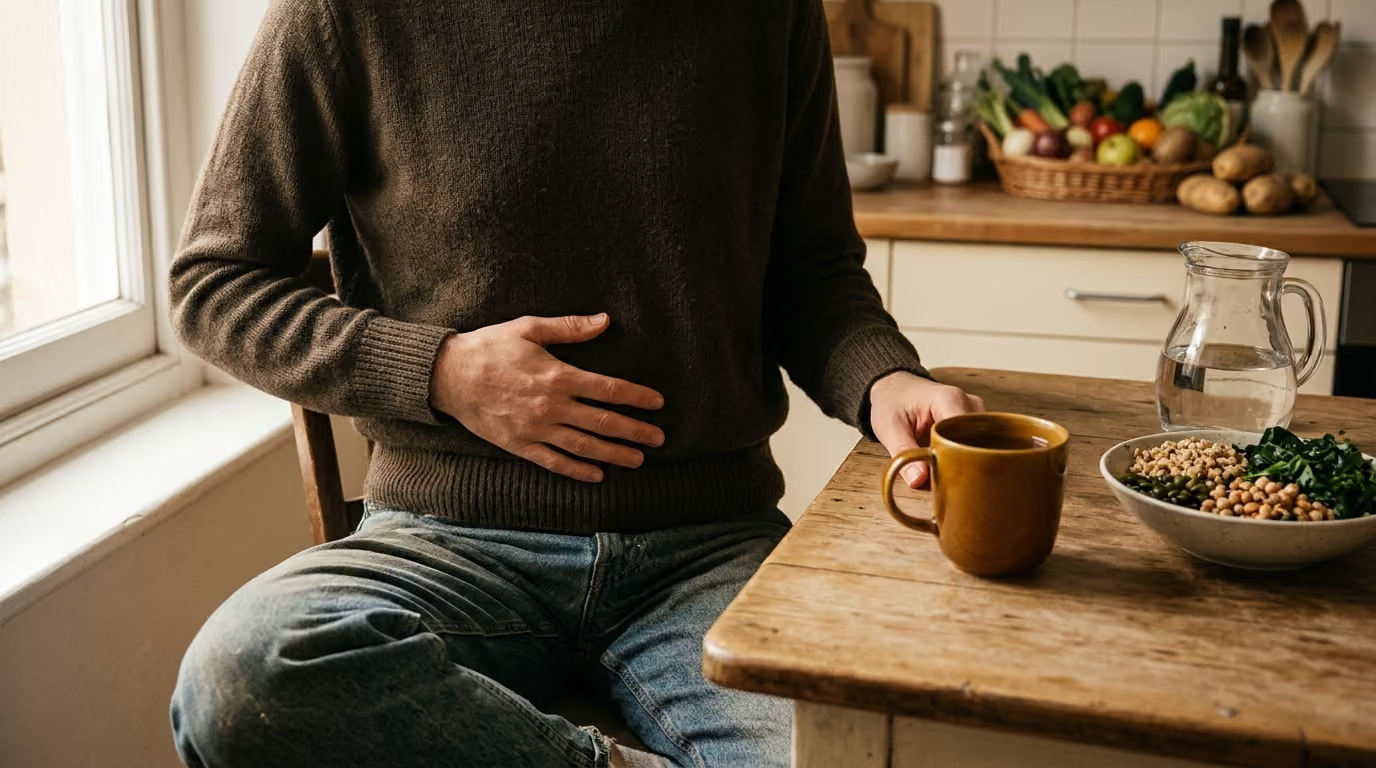

The large intestine regulates fluid balance, supports vital gut microbes, forms stool, and maintains healthy bowel regularity through coordinated digestive processes.





You drink water throughout the day, eat regular meals, and your body quietly manages the rest. Most people rarely think about what happens to those fluids and food particles once they leave the stomach. Yet by the time digested material reaches the lower abdomen, an intricate physiological transformation is underway. The large intestine takes a watery slurry of unabsorbed residues and systematically turns it into a formed, manageable solid.
Understanding this final phase of digestion helps demystify how our bodies maintain fluid balance and regulate daily bowel movements. The large intestine does not act as a simple waste pipe. Instead, scientific consensus recognizes the colon as an active organ responsible for fluid recovery, electrolyte balance, microbial fermentation, and the controlled storage and evacuation of stool.
Every day, the digestive tract processes liters of fluid originating from drinking, eating, and internal digestive secretions. The small intestine absorbs the vast majority of this volume alongside essential vitamins, amino acids, and simple sugars. The remaining fluid and non-digestible substrates pass through the ileocecal valve into the cecum and colon. Here, the large intestine reclaims up to ninety percent of that residual water while providing a stable home for trillions of resident microbes.
By looking closely at the physiology of the colon, we can better understand how our daily habits influence stool form, transit time, and overall gastrointestinal comfort. This resource walks through the precise mechanisms governing colonic fluid transport, microbial activity, wall motility, and the everyday signals that govern healthy bowel elimination.
To understand the large intestine, it helps to contrast its responsibilities with those of the small intestine. The human gastrointestinal tract processes between eight and ten liters of fluid every single day. This vast volume includes not only the water and beverages you drink, but also saliva, gastric juice, bile, and pancreatic secretions.
The small intestine performs the initial heavy lifting of digestion and absorption. Clinical physiology indicates that the duodenum, jejunum, and ileum absorb roughly ninety-five percent of dietary carbohydrates and proteins. They also absorb approximately ninety percent of the total fluid volume passing through the digestive lumen. This means that out of nine or ten total liters, seven to eight liters are absorbed before contents ever reach the lower bowel.
The large intestine receives the remaining volume, which typically amounts to between one and two liters of fluid per day. Rather than absorbing macronutrients directly, the colon focuses on reclamation and refinement. It extracts the remaining water and essential electrolytes, ensuring the body does not lose vital hydration through regular digestion.
This functional division reflects differences in anatomical structure and cellular machinery. The small intestine features extensive circular folds, villi, and microvilli designed to maximize surface area for nutrient uptake. The large intestine lacks these finger-like villi, presenting a smoother mucosal surface lined with deep crypts. Its cellular architecture is optimized for fluid exchange, mucus secretion, microbial housing, and progressive compaction.
Understanding this division prevents common misunderstandings about human digestion. The small intestine is our primary nutrient-harvesting engine, while the large intestine serves as a dedicated system for fluid conservation, microbial processing, and waste preparation. For more background on how these regions work together, you can read our overview of digestion and everyday gut function.
Water does not move across the colonic lining on its own. Instead, water transport is an entirely passive process driven by osmotic gradients created by active electrolyte movement. The cells lining the colon, known as colonocytes, actively pump ions across their membranes. As solutes move, water naturally follows to balance the concentration on both sides of the intestinal barrier.
Sodium absorption represents the primary driving force behind colonic water recovery. Specialized sodium channels and transport proteins located on the apical membrane of colonocytes pull sodium ions from the intestinal lumen into the cell. Basolateral pumps then transport this sodium into the interstitial fluid. This movement creates an osmotic pull that draws water molecules out of the fecal stream and back into the bloodstream.
Chloride and bicarbonate exchange works alongside sodium transport to maintain electrical neutrality and acid-base balance. The colon absorbs chloride ions while secreting bicarbonate into the lumen. This bicarbonate neutralizes acidic byproducts produced during microbial fermentation, protecting the intestinal lining from chemical irritation. Potassium can be either absorbed or secreted depending on systemic concentrations and hormonal signals like aldosterone.
It is equally important to recognize that the large intestine is not merely a one-way sponge. The colonic epithelium possesses robust secretory mechanisms that run concurrently with absorption. Crypt cells in the colon secrete chloride and fluid through specialized ion channels. Under normal physiological conditions, absorption outpaces secretion, resulting in net fluid recovery and firm stool formation.
When this delicate balance shifts, changes in stool consistency occur rapidly. If secretory pathways become overactive or if absorption is impaired, fluid accumulates rapidly in the colonic lumen. This imbalance can quickly overwhelm the colon's capacity for fluid uptake, leading to loose or watery bowel movements. You can learn more about systemic fluid and mucosal dynamics in our guide to digestive health.
While human enzymes in the stomach and small intestine break down starches and simple proteins, certain dietary components resist digestion entirely. Dietary fibers, resistant starches, and non-digestible oligosaccharides pass untouched into the large intestine. Here, they encounter the dense microbial ecosystem of the human colon.
The large intestine houses hundreds of trillions of microorganisms, primarily obligate anaerobes. These microbes possess a vast array of specialized enzymes that human physiology lacks. When undigested carbohydrates arrive in the cecum and ascending colon, resident bacteria ferment these substrates to fuel their own growth and survival.
Fermentation produces several important metabolic byproducts, most notably short-chain fatty acids. The three most abundant short-chain fatty acids produced in the human colon are acetate, propionate, and butyrate. Acetate and propionate enter the portal circulation, where they contribute to systemic energy regulation, lipid synthesis, and metabolic signaling throughout the body.
Butyrate plays an exceptionally direct role within the colon itself. Colonocytes utilize butyrate as their primary source of cellular energy, deriving up to seventy percent of their metabolic fuel from this single microbial metabolite. Adequate butyrate availability supports cellular repair, strengthens tight junction proteins between epithelial cells, and promotes a healthy mucosal barrier.
Fermentation also yields metabolic gases, including carbon dioxide, hydrogen, and in some individuals, methane. These gases contribute to normal intestinal gas volume and are naturally expelled or absorbed through the mucosal wall. The precise balance of gases and metabolites produced varies widely from person to person based on diet, transit speed, and microbial community structure.
In addition to short-chain fatty acids, colonic microbes synthesize certain micronutrients, including vitamin K and several B vitamins such as biotin and folate. While this local synthesis contributes to the metabolic pool, it serves as a supplement to, rather than a replacement for, balanced dietary intake. For a deeper look at these microbial processes, see our resource on gut microbiome and digestive science.
The physical transformation of liquid chyme into solid stool requires specific patterns of muscular movement. The colon relies on specialized motility patterns that differ significantly from the continuous, rapid peristalsis of the upper digestive tract. These movements ensure that contents remain in contact with the mucosal lining long enough for fluid recovery and fermentation to occur.
Haustral contractions represent the most frequent type of colonic motility. The outer muscular layer of the colon forms three distinct bands called teniae coli, which cause the wall of the intestine to bulge into small pouches termed haustra. Haustral contractions are slow, rhythmic churning movements that mix the contents back and forth within each segment.
This continuous mixing serves two distinct purposes:
In addition to slow haustral churning, the large intestine utilizes mass movements to transport material over longer distances. Mass movements are powerful, sweeping contractions of the circular muscle layer that occur only one to three times per day. These contractions typically happen after meals, triggered by the gastrocolic reflex, which coordinates stomach distension with colonic propulsion.
A mass movement clears a long section of the colon in a single coordinated wave, pushing fecal material from the transverse and descending colon into the sigmoid colon and rectum. As material moves through this sequence, its water content steadily decreases. What began as a fluid suspension in the cecum gradually becomes a cohesive, semi-solid mass ready for temporary storage.
A common misconception is that stool consists solely of leftover, undigested food. In reality, human stool is a complex biological composite comprising unabsorbed dietary remnants, living and dead microbial matter, shed intestinal cells, and bodily secretions.
On average, a typical human stool is composed of roughly seventy-five percent water and twenty-five percent solid material. However, this proportion varies based on diet, hydration status, and colonic transit time. The solid portion can be broken down into several primary constituents:
The high proportion of microbial biomass illustrates the living nature of the colonic environment. As bacteria multiply during the fermentation of fiber, they contribute substantial physical mass to the stool. This microbial bulk provides volume and pliability, which stimulates the intestinal wall and aids smooth transit.
Mucus also plays an essential mechanical role in stool formation. Goblet cells distributed along the colonic crypts continuously secrete gel-forming mucins. This mucus layer forms a protective barrier that shields the delicate epithelial lining from physical abrasion by firm fecal particles and protects tissues from bacterial invasion.
The characteristic brown color of stool comes from the breakdown products of red blood cells. Bile pigments, primarily bilirubin, are secreted into the small intestine and subsequently transformed by colonic bacteria into stercobilin and urobilin. These chemical compounds produce the standard earthy tones associated with normal digestive output.
The final stage of colonic function involves the coordinated storage and elimination of stool. The sigmoid colon acts as a holding zone that feeds into the rectum. Under resting conditions, the rectum remains largely empty until a mass movement propels fecal material past the rectosigmoid junction.
When stool enters the rectum, the rectal walls stretch to accommodate the incoming volume. This mechanical distension stimulates specialized stretch receptors embedded in the muscular layers of the rectal wall. These receptors send afferent nerve signals to the spinal cord and brain, creating the conscious awareness of a bowel urge.
The physical mechanics of elimination rely on the coordinated action of two distinct muscular sphincters:
The lining of the upper anal canal contains specialized sensory receptors capable of sampling the physical consistency of rectal contents. This allows the central nervous system to distinguish between gas, liquid, and solid stool. If defecation is inconvenient, the external anal sphincter contracts, the puborectalis muscle tightens to maintain an acute anorectal angle, and the rectum relaxes to temporarily store the contents.
When defecation proceeds, voluntary relaxation of the external anal sphincter and puborectalis muscle straightens the anorectal pathway. A modest increase in intra-abdominal pressure, assisted by the diaphragm and abdominal wall muscles, gently expels the stool. This elegant interplay between autonomic reflexes and conscious motor control ensures seamless daily elimination. Readers interested in the neurological aspects of digestion can consult our overview of the gut-brain connection and whole-body wellness.
Stool consistency provides meaningful clues regarding the inner workings of the colon. Because water absorption occurs continuously as contents move along the mucosal lining, the amount of time material spends in the large intestine directly shapes the physical form of the stool.
To standardize the clinical description of bowel movements, researchers developed the Bristol Stool Form Scale. This tool classifies human stool into seven distinct categories based on appearance and texture:
When transit is slow, contents remain in the colon for prolonged periods. The epithelium continues to extract sodium and water, leaving the stool dry, compact, and hard. Conversely, when transit is abnormally rapid, the colon lacks sufficient contact time to absorb the incoming fluid, resulting in loose, unformed bowel movements.
It is important to emphasize that the Bristol Stool Form Scale serves as a descriptive proxy for transit time and stool hydration, not a standalone diagnostic tool. Normal bowel habits vary considerably from person to person. A healthy individual might pass a formed stool three times a day or once every two days without discomfort. For practical strategies on tracking and managing stool consistency, explore our dedicated section on bloating and regularity.
Public discussions surrounding colon health are often filled with outdated concepts and physiological errors. Clarifying these misconceptions helps individuals interpret their everyday digestion with greater confidence and less anxiety.
Many people assume that because the colon produces solid stool from liquid material, it must absorb all the water we drink. In truth, the small intestine absorbs the vast majority of all fluid, handling seven to eight liters daily. The colon performs an important finishing role by recovering the remaining one to two liters, ensuring that only about one hundred to two hundred milliliters leave the body in stool.
Another widespread belief is that the colon is simply a one-way tissue that draws fluid inward. In reality, the colonic epithelium maintains active secretory pathways in its mucosal crypts. Under normal circumstances, absorption exceeds secretion. However, when these secretory pathways are triggered by inflammatory signals or bacterial toxins, the colon can rapidly secrete large volumes of fluid, contributing to acute diarrhea.
It is easy to imagine that bowel movements represent only unabsorbed dietary remnants. In truth, up to half of the dry weight of stool consists of living and dead bacteria that flourished in the large intestine. The rest includes shed human epithelial cells, lubricating mucus, bile breakdown products, and insoluble plant material. Stool reflects an active, dynamic biological ecosystem rather than a simple pile of discarded food.
A rigid belief persists that failing to have a bowel movement every twenty-four hours indicates an underlying health problem. Medical organizations like the National Institute of Diabetes and Digestive and Kidney Diseases emphasize that normal bowel frequency spans a wide range. Clinical criteria for constipation look beyond frequency alone, considering stool consistency, excessive straining, abdominal pain, and feelings of incomplete evacuation.
Maintaining steady fluid absorption, microbial balance, and smooth stool formation relies heavily on basic daily habits. You do not need extreme dietary regimens or unproven cleanses to support the natural physiology of your large intestine. Instead, consistent, incremental lifestyle adjustments yield reliable results.
One grounded, actionable step is to gradually optimize your dietary fiber intake while maintaining adequate daily hydration. Dietary fiber acts as the primary substrate for beneficial microbial fermentation and provides the physical structure needed for well-formed stool. However, introducing large amounts of fiber too quickly can lead to transient gas, bloating, and abdominal discomfort.
Soluble fiber absorbs water to create a soft, viscous gel, preventing stool from becoming overly hard and dry. Insoluble fiber resists breakdown, providing mechanical bulk that gently stretches the colonic wall to stimulate regular haustral contractions and mass movements. When combined with consistent fluid consumption, this balanced approach supports optimal transit time and effortless evacuation. For further dietary recommendations, visit our guide on nutrition, fiber and gut-friendly eating.
Gastrointestinal research continues to uncover deeper complexities regarding how the colon coordinates fluid transport and microbial ecology. While classical physiology established the basic principles of sodium transport and osmosis decades ago, current investigations are focusing on the microscopic regulation of epithelial ion channels and tight junction proteins.
Researchers are actively examining how microbial metabolites, such as short-chain fatty acids, directly modulate epithelial transport mechanisms. Emerging evidence suggests that butyrate and propionate can influence the expression of specific sodium-hydrogen exchangers and chloride transporters in the mucosal lining. This suggests that resident bacteria may actively help regulate the hydration level of their own luminal habitat.
Another promising area of inquiry involves the colonic mucus layer. Scientists are studying how different bacterial species interact with the inner and outer mucus barriers. The inner mucus layer is normally sterile and firmly attached to the epithelial cells, while the outer layer provides a rich habitat for foraging microbes. Understanding how diet and microbial shifts alter this protective gel could offer new insights into gut barrier integrity and mucosal resilience.
While these emerging observations are compelling, researchers emphasize that they represent ongoing scientific investigation rather than finalized clinical protocols. They reinforce the concept that the large intestine operates as an interconnected biological network where epithelial transport, microbial metabolism, and nervous system signaling constantly influence one another.
Everyday digestive habits naturally fluctuate in response to dietary changes, hydration levels, travel, and emotional stress. Occasional firm or loose stools are a routine part of human digestion and usually resolve quickly on their own. However, persistent changes in bowel function or the presence of specific red-flag symptoms warrant evaluation by a qualified medical professional.
You should consult a healthcare provider if you experience any of the following symptoms:
A medical evaluation can help identify or rule out underlying conditions such as inflammatory bowel disease, celiac disease, structural obstructions, or irritable bowel syndrome. Communicating your symptoms clearly, including stool consistency, frequency, and duration, helps your doctor recommend appropriate diagnostic steps and individualized care.
When to revisit this resource: Refer back to this guide whenever you experience shifts in stool consistency, want to adjust your dietary fiber and fluid intake, or need a clear refresher on how your digestive tract processes everyday meals.
By understanding the physiological balance between water absorption, microbial fermentation, and coordinated muscular motility, you can view your bowel habits with clarity, confidence, and peace of mind.
DigestGenius publishes research-led guidance on digestion, the gut microbiome, fiber, probiotics, gut-brain signaling, inflammation and everyday digestive wellbeing.


Explore clear, research-led guidance on digestion, the microbiome, food, fiber, probiotics and the gut-brain connection.
read the blog