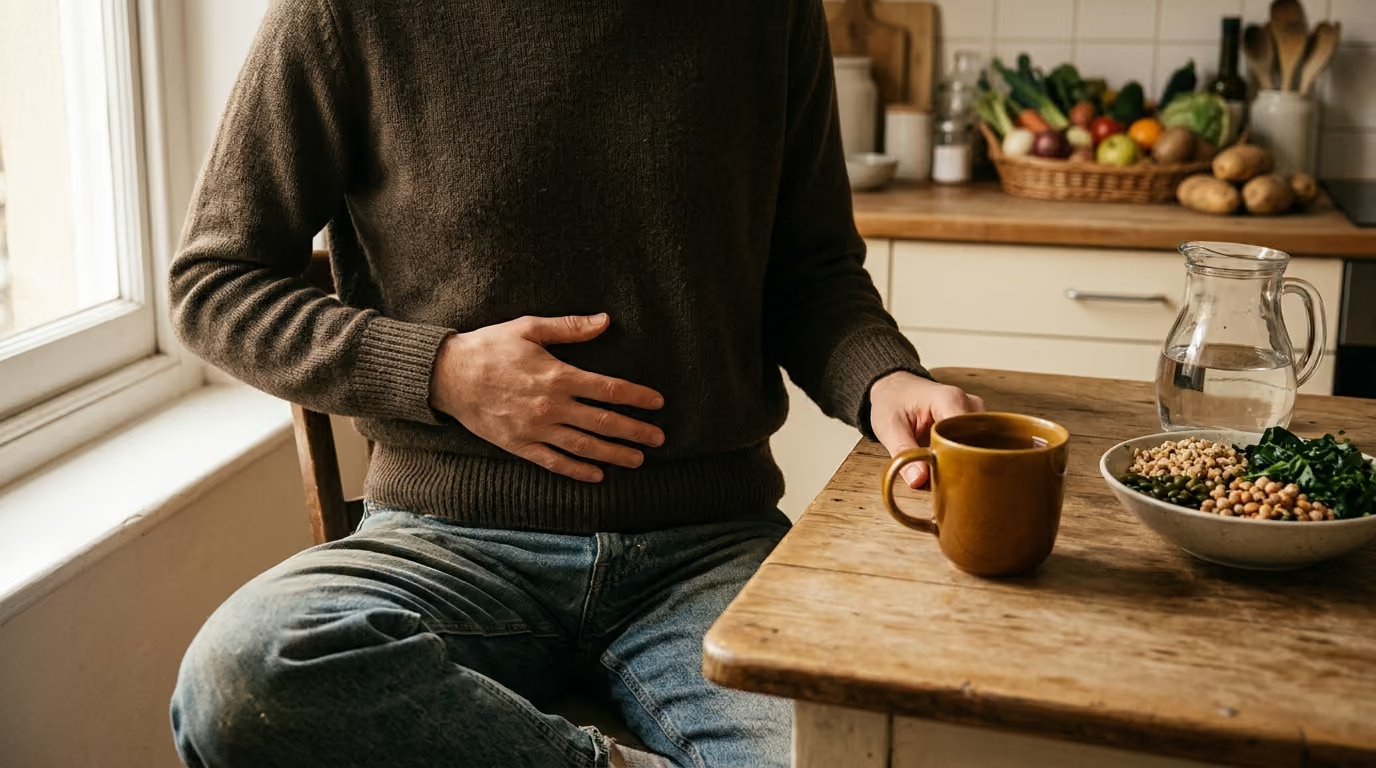

Stomach acid does not break down meals alone because mechanical forces and specialized enzymes must work together to digest and absorb dietary nutrients.





Many people search online for why they feel full, bloated, or sluggish hours after eating a meal. It is common to wonder whether food is sitting in the stomach or why certain meals take longer to process than others. The human digestive tract is often imagined as a simple holding tank where acid dissolves whatever we swallow.
In reality, digestion is an elaborate, multi-stage assembly line that spans several organs, muscular contractions, and biochemical fluids.
To understand how nutrients enter the body, one must separate the physical movement of food from its chemical breakdown and eventual absorption. Chewing, muscular churning, gastric acid, specialized enzymes, and bile salts all perform distinct jobs. When these mechanisms work in harmony, large meals are transformed into microscopic molecules that fuel everyday cellular life.
This guide provides a comprehensive examination of mechanical and chemical digestion. You will learn the exact biological sequence that occurs from your first bite to the final stages of nutrient absorption.
Scientific consensus views digestion not as a single event, but as a coordinated sequence of mechanical and chemical operations. Digestion begins with physical breakdown, continues through chemical hydrolysis, and concludes with nutrient uptake across the intestinal barrier. Each organ along the gastrointestinal tract contributes specific muscular actions and specialized secretions. If one phase is cut short or impaired, subsequent phases must adapt or suffer reduced efficiency.
Physiologists categorize the processing of food into three distinct, interdependent stages:
Research emphasizes that mechanical work and chemical work are mutually supportive. Mechanical breakdown increases the total surface area of food particles. This expanded surface area allows chemical secretions, such as gastric juice and pancreatic enzymes, to access substrate molecules far more efficiently. Conversely, chemical liquefaction softens food mixtures, making it easier for muscular contractions to propel and mix the contents.
A standard framework used in gastroenterology separates luminal events from mucosal events. In the intestinal lumen, bulk fluid digestion occurs through pancreatic enzymes and bile salts. Following luminal breakdown, final digestion takes place directly on the brush border of the intestinal lining before nutrients are absorbed. Understanding this sequence helps explain why digestive health depends on both muscular motility and biochemical secretions.
Mechanical digestion refers to all the physical forces that crush, grind, mix, and propel food through the body. This process does not alter the molecular structure of nutrients. Instead, it changes the physical size, texture, and location of the ingested material. Mechanical digestion ensures that food moves steadily forward while staying thoroughly saturated with digestive fluids.
The mechanical journey begins in the oral cavity through mastication, commonly known as chewing. The teeth exert significant compressive and shearing forces that tear fibrous foods, crush seeds, and fragment solid matter into smaller pieces. As the jaw moves, the tongue continuously positions food between the upper and lower teeth.
Chewing serves two critical mechanical purposes. First, it reduces particle size to prevent choking and facilitate smooth swallowing. Second, it blends food with saliva to form a pliable, cohesive mass called a bolus. Saliva lubricates the bolus, decreasing friction as it prepares to leave the mouth.
Once swallowed, the food bolus enters the esophagus, a muscular tube connecting the throat to the stomach. The esophagus does not grind food or contribute to chemical digestion. Its primary function is rapid, coordinated mechanical propulsion.
This propulsion is accomplished through peristalsis. Peristalsis consists of rhythmic, wave-like contractions of circular and longitudinal smooth muscles. The circular muscles contract behind the bolus to push it forward, while the longitudinal muscles contract ahead of it to shorten the tube. This coordinated wave moves the bolus downward toward the lower esophageal sphincter in a matter of seconds.
When food passes the lower esophageal sphincter, it enters the stomach, where mechanical digestion intensifies. The stomach wall contains three distinct layers of smooth muscle: circular, longitudinal, and oblique layers. This three-layered muscular arrangement allows the stomach to twist, knead, and churn its contents with remarkable force.
During gastric processing, peristaltic waves travel from the upper stomach down toward the pylorus, the narrow muscular exit. As these waves approach the closed or slightly opened pyloric sphincter, food particles are crushed and forced backward into the body of the stomach. This backward splashing motion is known as retropulsion. Retropulsion breaks down solid pieces until the entire meal is transformed into an acidic, semi-fluid paste known as chyme.
When chyme enters the small intestine, mechanical processing shifts from intense grinding to gentle mixing and transit. The small intestine uses two primary patterns of muscular motility: segmentation and peristalsis.
Segmentation consists of localized contractions of circular smooth muscle that divide the intestine into small segments. These contractions alternate back and forth, sloshing the chyme over short distances. Segmentation does not move food forward rapidly. Instead, it continuously mixes chyme with pancreatic juice, bile, and intestinal secretions, bringing fresh nutrients into direct contact with the absorptive intestinal wall.
Between digestive periods, a distinct motility pattern called the migrating motor complex sweeps through the stomach and small intestine. This sweeping motion clears residual undigested debris, bacteria, and cellular shedding toward the large intestine. Readers interested in learning how motility patterns influence daily comfort can read our detailed guide on bloating and regularity mechanisms.
Chemical digestion is the process of breaking covalent bonds within complex food molecules using water, acids, and specialized enzymes. This chemical reaction is known as enzymatic hydrolysis. While mechanical digestion grinds food into smaller physical chunks, chemical digestion dismantles carbohydrates, proteins, and fats into simple units that the body can transport across cellular membranes.
Gastric acid, primarily hydrochloric acid, is secreted by parietal cells in the stomach lining. A common point of confusion is the belief that acid alone digests food into absorbable nutrients. Gastric acid does not break molecular peptide bonds or split complex fats by itself.
Instead, stomach acid creates an intensely acidic environment, typically between pH 1.5 and 3.5. This low pH serves several essential preparatory functions:
Once the acidic chyme enters the small intestine, specialized cells detect the low pH and trigger the release of bicarbonate from the pancreas. Pancreatic bicarbonate neutralizes the acid, raising the luminal pH to approximately 6.0 to 7.5. This neutralization protects the intestinal lining and creates the ideal neutral pH required for pancreatic enzymes to operate.
Enzymes are specialized biological catalysts that accelerate chemical reactions without being consumed in the process. Each digestive enzyme targets a specific type of chemical bond. They are secreted at specific checkpoints along the digestive tract to ensure orderly breakdown.
Salivary glands produce salivary amylase, which initiates the breakdown of cooked starches in the mouth. In the stomach, pepsin begins cleaving large protein chains into smaller polypeptide fragments. Gastric lipase is also released in small amounts to initiate early fat digestion.
The pancreas serves as the primary enzyme factory of the body, producing approximately 1.5 liters of enzyme-rich fluid each day. Pancreatic juice contains an array of potent enzymes:
Final chemical digestion occurs at the brush border of the small intestinal enterocytes. These microvilli possess membrane-bound enzymes, such as lactase, sucrase, maltase, and various peptidases. These surface enzymes complete the final breakdown of oligomers into single monomer units immediately prior to cellular uptake.
Bile is a greenish-yellow fluid produced continuously by the liver and stored in the gallbladder between meals. When fat-containing chyme enters the duodenum, the hormone cholecystokinin stimulates the gallbladder to contract, releasing concentrated bile into the intestinal lumen.
Bile is not an enzyme. It contains no catalytic proteins and cannot chemically hydrolyze lipid molecules. Instead, bile consists of bile salts, phospholipids, cholesterol, and electrolytes that perform a physical-chemical process called emulsification.
Because dietary fats are hydrophobic, they naturally coalesce into large oil droplets within the watery environment of the intestinal lumen. Pancreatic lipase is water-soluble and can only act on the exterior surface of these droplets. Bile salts possess both water-loving and fat-loving properties, allowing them to coat the fat droplets and break them into tiny emulsion droplets. This dramatic increase in surface area enables pancreatic lipase and its helper protein, colipase, to rapidly break down triglycerides.
Following hydrolysis, bile acids and phospholipids surround the resulting fatty acids and monoglycerides to form mixed micelles. These microscopic micelles act as transport vehicles, carrying insoluble lipids through the unstirred water layer to the surface of the intestinal cells for absorption.
The human diet consists primarily of three major macronutrients: carbohydrates, proteins, and fats. Each macronutrient follows a dedicated mechanical and chemical pathway to reach its absorbable end products.
Carbohydrates are ingested as complex polysaccharides (such as starch and glycogen), disaccharides (such as sucrose and lactose), and non-digestible dietary fibers. The goal of carbohydrate digestion is to break complex chains into single monosaccharides: glucose, galactose, and fructose.
The process begins in the mouth with salivary amylase, which cleaves internal alpha-1,4-glycosidic bonds. When food reaches the acidic stomach, salivary amylase is largely inactivated. The bulk of carbohydrate digestion resumes in the duodenum through the action of pancreatic amylase.
Pancreatic amylase reduces starches into disaccharides and short oligosaccharides. Next, brush-border enzymes situated on the intestinal lining execute the final step:
Once broken into single sugars, glucose and galactose enter the absorptive enterocytes via active transport mechanisms driven by sodium gradients. Fructose enters through facilitated diffusion. The absorbed simple sugars pass through the base of the cell into local capillaries, where the bloodstream carries them directly to the liver via the hepatic portal vein.
Those seeking a deeper understanding of dietary fiber and carbohydrate metabolism can consult our overview of food and fiber nutrition.
Dietary proteins are complex, tightly folded chains of amino acids. Digestion must unfold these proteins and systematically sever their peptide bonds until only free amino acids, dipeptides, and tripeptides remain.
Protein digestion begins in the stomach. Gastric acid uncoils the protein structure, exposing the internal peptide backbone to pepsin. Pepsin cleaves bonds adjacent to aromatic amino acids, producing smaller polypeptide chains.
When chyme moves into the small intestine, the pancreas supplies potent endopeptidases (trypsin and chymotrypsin) and exopeptidases (carboxypeptidases). Endopeptidases cut internal bonds within the peptide chains, while exopeptidases remove amino acids from the ends. Intestinal brush-border aminopeptidases continue this breakdown right at the cell surface.
Free amino acids, dipeptides, and tripeptides are absorbed into enterocytes through specialized transport proteins. Inside the cells, cytosolic peptidases hydrolyze remaining dipeptides and tripeptides into single amino acids. These amino acids exit the cells, enter the portal bloodstream, and travel to the liver for systemic distribution and tissue repair.
Dietary lipids consist mainly of neutral triglycerides, along with small amounts of phospholipids and cholesterol esters. Because fats do not dissolve in water, their digestion requires close cooperation between mechanical churning, bile salts, and lipolytic enzymes.
Fat digestion begins modestly in the stomach via lingual and gastric lipases, which hydrolyze a small fraction of triglycerides. The primary site of lipid digestion is the duodenum. Here, bile salts emulsify fat droplets, allowing pancreatic lipase and colipase to cleave triglycerides into two free fatty acids and one 2-monoglyceride.
These lipolytic products, along with fat-soluble vitamins (A, D, E, and K), aggregate with bile salts to form mixed micelles. These micelles diffuse across the unstirred water layer lining the intestinal wall. At the brush border, fatty acids and monoglycerides dissociate from the micelles and pass across the cell membrane through diffusion and fatty acid transport proteins.
Inside the intestinal cell, the endoplasmic reticulum reassembles these components back into triglycerides. The cell packages triglycerides, phospholipids, cholesterol, and specialized proteins into large transport spheres called chylomicrons. Because chylomicrons are too large to penetrate blood capillary pores, they enter specialized lymphatic vessels called lacteals.
The lymphatic system transports these fats through the thoracic duct, releasing them into the general venous circulation near the heart, bypassing direct initial delivery to the liver. For more foundational information on how these systems operate together, explore our library on everyday digestive function.
Digestion is frequently oversimplified into single-step reactions. In reality, many vital nutrients rely on intricate, multi-organ sequences where a minor disruption at one checkpoint compromises the entire process.
The absorption of vitamin B12 (cobalamin) provides a classic example of sequential digestive cooperation. Vitamin B12 cannot simply be absorbed upon entering the small intestine; it requires four distinct physiological stages across four different anatomical zones:
If any link in this biological chain is interrupted, such as insufficient stomach acid, diminished pancreatic enzyme production, or surgical removal of the terminal ileum, vitamin B12 absorption fails. This illustrates why digestive efficiency depends on continuous, coordinated teamwork between organs.
Lactose digestion demonstrates what occurs when a single brush-border chemical step is missing or diminished. Lactose is a disaccharide found in mammalian dairy products that cannot be absorbed without enzymatic cleavage into glucose and galactose.
Under normal conditions, the enzyme lactase, located on the brush border of the jejunal enterocytes, splits lactose efficiently. However, in individuals with primary or secondary lactase deficiency, lactase levels are insufficient to process dietary loads of the sugar.
When undigested lactose escapes breakdown in the small intestine, it moves down into the colon. Because lactose is osmotically active, it draws water into the intestinal lumen, leading to loose stools or diarrhea.
Furthermore, colonic bacteria rapidly ferment the unabsorbed lactose, producing short-chain fatty acids, carbon dioxide, hydrogen gas, and methane. This bacterial fermentation leads to noticeable bloating, cramping, rumbling sensations, and flatulence. Lactose intolerance illustrates how a failure in upper chemical digestion directly impacts distal microbial activity and gastrointestinal comfort.
Digestive health is surrounded by widespread myths that misrepresent how the body handles food. Clarifying these misconceptions helps readers evaluate gut-health claims with rational, evidence-based perspective.
A widespread belief is that the stomach is the principal organ where food is completely digested and absorbed. In physiological terms, the stomach acts primarily as a reservoir, mechanical grinder, and sterilizing vat. While it begins protein and minor fat digestion, very little nutrient absorption occurs through the gastric wall.
The vast majority of chemical digestion and nearly all nutrient absorption take place in the small intestine. The duodenum and jejunum handle the intense biochemical work of breaking down carbohydrates, proteins, and fats, while the ileum absorbs bile salts and specific micronutrients. The stomach merely prepares food for the intricate chemical processing that occurs downstream.
Popular culture often portrays stomach acid as a universal solvent capable of dissolving everything that enters the gastrointestinal tract. Stomach acid does not dissolve or destroy essential nutrients. Hydrochloric acid specifically unfolds complex protein chains and activates pepsinogen into pepsin.
Stomach acid does not hydrolyze complex starches or break down dietary fats. In fact, if food contents remained highly acidic throughout the digestive tract, pancreatic enzymes would be denatured and rendered completely useless. The precise neutralization of acid by pancreatic bicarbonate in the duodenum is just as important as the initial acidification in the stomach.
Bile is frequently mischaracterized in commercial wellness spaces as an enzyme or a substance that burns dietary fat. As established by physiological research, bile contains no enzymatic properties. Bile salts do not break covalent chemical bonds within triglyceride molecules.
Bile functions strictly as an emulsifier and transport carrier. By breaking large fat globules into microscopic droplets, bile increases the physical surface area available for pancreatic lipase to perform actual chemical cleavage. Emulsification is a physical-chemical helper process, not enzymatic hydrolysis.
While thorough chewing is beneficial for digestive comfort, mechanical mastication cannot replace the chemical work performed by enzymes and bile. Chewing breaks food into smaller particles, but it cannot sever molecular bonds within proteins, fats, or complex starches.
Even if food is blended into a completely liquid smoothie before ingestion, the body must still deploy stomach acid, pepsin, pancreatic proteases, lipases, and brush-border enzymes to convert macronutrients into absorbable units. Mechanical breakdown assists chemical digestion, but it cannot substitute for enzymatic processing.
It is often assumed that once nutrients cross the intestinal lining, they all flow directly into the general blood circulation. The human body uses two completely different vascular pathways for distributing absorbed nutrients based on their solubility.
Water-soluble nutrients, including simple sugars, amino acids, water-soluble vitamins, and minerals, pass into mesenteric capillaries and travel through the portal vein directly to the liver. In contrast, long-chain fatty acids and fat-soluble vitamins are packaged into chylomicrons and enter the lymphatic system. These fats bypass initial liver filtering and travel through the lymphatic system before entering the bloodstream near the heart.
A pervasive wellness myth suggests that undigested food stagnates, putrefies, and coats the colon walls with toxic build-up. In a healthy gastrointestinal tract, non-digestible components, such as dietary fiber and resistant starch, move steadily through the large intestine via regular peristaltic contractions.
Rather than rotting, non-digestible carbohydrates serve as vital fuel for trillions of beneficial microbes residing in the cecum and colon. Colonic bacteria ferment these fibers into beneficial short-chain fatty acids, such as butyrate, acetate, and propionate, which nourish colon cells and help synthesize vitamin K. To learn more about how gut microbes interact with digestion, read our guide on microbiome science and digestive health.
Contemporary gastroenterology and nutritional science have moved beyond studying isolated nutrients. Emerging research increasingly focuses on the food matrix, which refers to the complex physical and structural architecture in which nutrients are naturally enclosed.
Recent physiological studies demonstrate that the physical matrix of food significantly alters gastric emptying rates, enzymatic accessibility, and glycemic response. For instance, consuming intact whole grains produces a much slower, sustained release of glucose compared to consuming finely milled flour with the identical macronutrient profile. The intact cellular structures in whole foods mechanically shield starches from rapid salivary and pancreatic amylase hydrolysis.
Researchers are also examining how the rate of upper gastrointestinal digestion influences the distal microbiome. When food structures are digested very rapidly in the upper jejunum, fewer nutrients and complex fibers reach the distal ileum and colon.
Conversely, foods that require prolonged mechanical and chemical breakdown deliver diverse dietary substrates to lower intestinal zones, supporting a richer microbial ecosystem.
These emerging insights confirm that digestion is not a static formula. Instead, it is a dynamic, rate-dependent process influenced by the structural form of our food. Readers interested in lifestyle adjustments to support these natural systems can browse our collection on gut-brain lifestyle strategies.
Supporting the mechanical and chemical components of digestion does not require extreme regimens or restrictive practices. Grounded, sustainable habits that align with human digestive physiology can noticeably improve digestive comfort.
The most effective mechanical habit you can control is the thoroughness of chewing and the pace of your meals. Chewing each bite until it reaches a smooth, semi-liquid consistency reduces the physical workload placed on the stomach.
Eating slowly also prevents excessive swallowing of air, known as aerophagia, which is a frequent cause of upper abdominal fullness and belching. Give yourself at least twenty minutes to complete a substantial meal, allowing mechanical receptors to signal satiety naturally.
You can support your body's natural chemical secretions through simple, sensible dietary practices:
Occasional, mild digestive changes after a heavy or unfamiliar meal are normal aspects of human physiology. However, persistent or severe digestive symptoms may indicate an underlying motility disorder, enzyme insufficiency, mucosal inflammation, or structural impairment that requires medical evaluation.
If you experience persistent gastrointestinal discomfort, consult a qualified healthcare professional or gastroenterologist. Do not attempt to self-treat chronic symptoms with excessive over-the-counter supplements or severe dietary restrictions.
Red flag symptoms that warrant prompt medical attention include:
A physician can conduct targeted diagnostic evaluations, such as fecal elastase testing for pancreatic function, breath tests for carbohydrate malabsorption, endoscopic imaging, or serological screenings for celiac disease. Obtaining an accurate diagnosis ensures that treatments target the exact biological cause of your symptoms.
Applying an understanding of mechanical and chemical digestion can help you make practical, evidence-informed decisions about your daily routine. Here is a practical checklist to implement this week:
DigestGenius publishes research-led guidance on digestion, the gut microbiome, fiber, probiotics, gut-brain signaling, inflammation and everyday digestive wellbeing.


Explore clear, research-led guidance on digestion, the microbiome, food, fiber, probiotics and the gut-brain connection.
read the blog