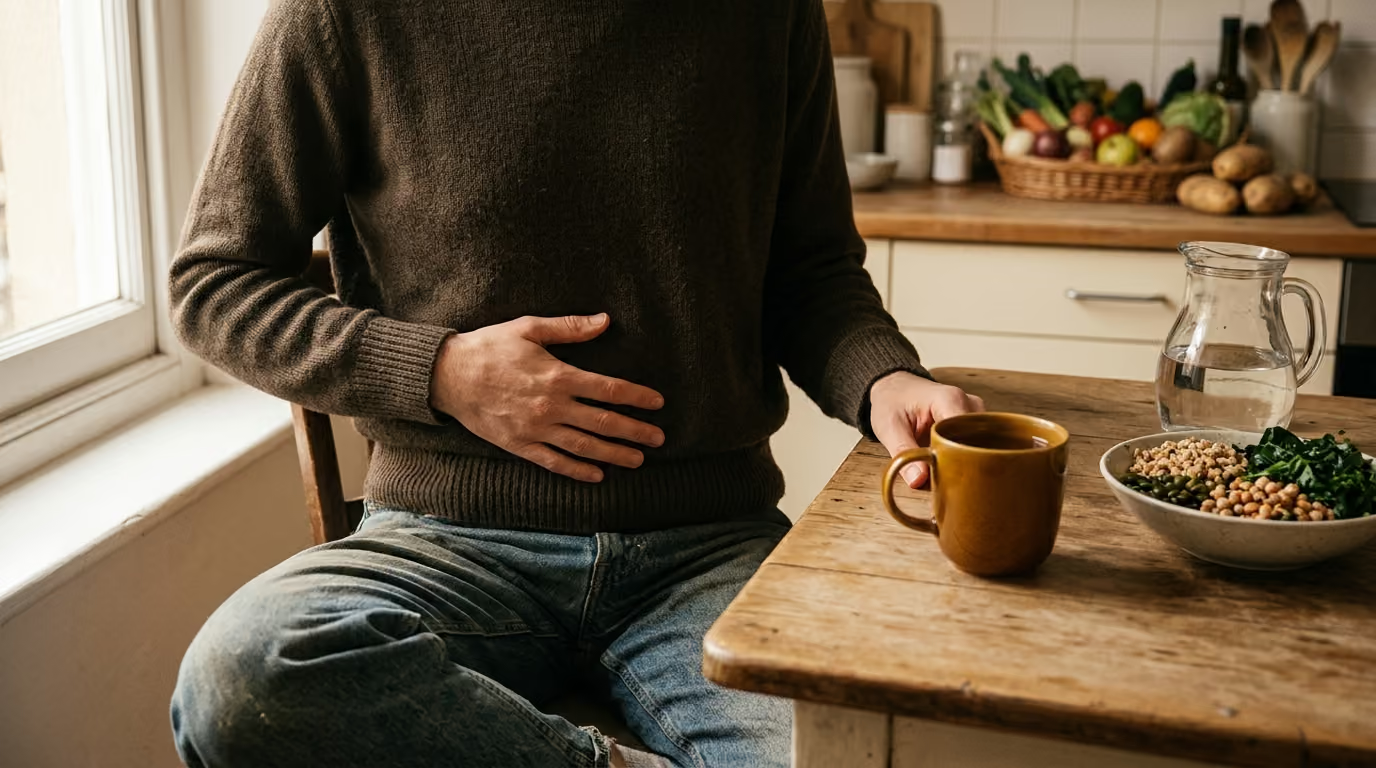

Clear insight into gastric emptying helps you appreciate how your stomach stores, breaks down, and meters food into the small intestine through complex regulation.





You finish a balanced dinner and sit down to relax. An hour later, you might feel a lingering fullness in your upper abdomen. You might wonder whether that meal is still resting in your stomach, or if it has already moved into your intestines.
Many people assume that digestion happens at a steady, clockwork pace. In reality, the journey of food through your upper digestive tract is dynamic, responsive, and carefully controlled.
Understanding how your stomach processes and releases food can help you make sense of everyday digestion. Learn more about digestion and everyday gut function to build a clearer picture of your digestive system.
Gastric emptying is the process by which the stomach delivers its contents into the duodenum. The duodenum is the first section of the small intestine. Medical science views gastric emptying not as simple gravity at work, but as a coordinated muscular and chemical process.
The stomach does not release food all at once. Instead, it holds, churns, grinds, and meters out nutrients in controlled amounts. This controlled release ensures that the small intestine has adequate time to neutralize stomach acid, mix digestive enzymes, and absorb nutrients.
Researchers agree that gastric emptying speed varies widely across healthy individuals. It also varies based on the type of food consumed. There is no single universal emptying rate that applies to every person or every meal.
Furthermore, clinical consensus emphasizes that how you feel after eating does not always match measured stomach function. Sensation and physical motility are separate biological processes. Experiencing fullness, mild nausea, or upper abdominal pressure does not automatically prove that your stomach is emptying too slowly or too quickly.
To understand gastric emptying, it helps to think of the stomach as a multi-stage processing unit. The stomach performs four primary jobs: accommodation, mechanical grinding, gated release, and responsive feedback.
When you chew and swallow food, the upper portion of the stomach relaxes. This area includes the fundus and the upper gastric body. This relaxation response is called gastric accommodation.
Accommodation allows the stomach to expand and receive incoming food without a sharp rise in internal pressure. If the stomach did not relax, eating a meal would cause immediate discomfort and pressure. Accommodation acts as an internal holding reservoir, storing the meal while downstream processes prepare to break it down.
While the upper stomach stores the meal, the lower stomach works constantly. The lower stomach is known as the antrum. The muscular walls of the antrum generate steady, rhythmic contractions.
These contractions mix the chewed food with gastric juice, which contains hydrochloric acid and pepsin. As the waves of muscle contraction move toward the exit of the stomach, they crush solid food particles against the stomach walls. This mechanical breakdown process is called trituration.
The human stomach cannot easily release large pieces of food into the delicate small intestine. Solid food must be ground down into tiny particles, usually measuring one to two millimeters in diameter or smaller. Once food is ground down and liquefied by stomach acid and enzymes, it forms a pulpy mixture called chyme.
Between the stomach and the small intestine sits a specialized ring of smooth muscle called the pyloric sphincter, or pylorus. The pylorus acts as a precise gateway.
As antral contractions push chyme toward the exit, the pylorus opens slightly to let a tiny volume of liquid and minute particles pass through. It then closes firmly, forcing larger food chunks backward into the antrum for additional grinding. This backward motion is called retropulsion.
Because of this coordinated gating, the stomach empties solids in small, pulsatile squirts rather than a continuous stream. Liquid and small particles flow through, while larger solids remain behind until they reach the required size.
The small intestine does not passively receive whatever the stomach sends. As chyme enters the duodenum, specialized sensor cells in the intestinal lining detect the presence of fats, proteins, acids, and carbohydrates.
When these nutrients arrive, the intestine sends both hormonal and nerve signals back to the stomach. These signals tell the antrum to slow its contractions and instruct the pylorus to tighten.
Scientists often refer to this mechanism as the duodenal brake or intestinal brake. It prevents the intestine from becoming overwhelmed by too many calories, too much acid, or excessive volume all at once. Gastric emptying is a two-way dialogue between the stomach and the intestine.
Solids and liquids do not leave the stomach in the same manner. Because liquids do not require mechanical grinding, they can pass through the pylorus relatively quickly.
Solid foods require a preliminary period of grinding, which creates a distinct lag phase before significant emptying begins. Once solid particles reach an acceptable size, emptying proceeds in a steady, linear fashion. Non-caloric liquids, such as plain water, empty rapidly along an exponential curve, with the fastest movement occurring right after ingestion.
Caloric liquids, such as milk, protein shakes, or soups, behave differently than plain water. When nutrients in a liquid hit the duodenum, they activate the intestinal brake. As a result, nutrient-dense drinks empty more slowly than water, bridging the mechanical gap between pure liquids and solid meals.
Gastric emptying speed is not fixed. It changes constantly based on meal composition, nervous system signals, hormones, and overall physical health. Understanding these variables provides helpful context for how we process different foods, which you can learn more about through food, fiber, and nutrition resources.
The total calorie content of a meal is one of the strongest regulators of gastric emptying. The small intestine is designed to absorb calories at a relatively steady rate, usually around one to four calories per minute.
When you consume a meal with high caloric density, the intestinal brake signals the stomach to meter out the contents more slowly. A high-volume meal of low-calorie leafy vegetables may leave the stomach faster than a smaller, high-calorie meal made of rich cheeses and oils. Total volume creates physical stretch, which stimulates initial contractions, but total energy density determines the sustained pace of release.
Different macronutrients influence stomach motility in unique ways. Dietary fat has a powerful delaying effect on gastric emptying.
When fats enter the duodenum, they stimulate the release of cholecystokinin, a gut hormone often called CCK. CCK relaxes the proximal stomach, suppresses antral grinding contractions, and increases pyloric muscle tone. This slowdown gives the liver time to secrete bile and the pancreas time to release lipase for fat digestion.
Proteins also slow gastric emptying, partly by stimulating regulatory hormones like peptide YY and GLP-1. Soluble dietary fibers can absorb water and create a viscous gel in the stomach. This gel slows mechanical mixing and delays the delivery of sugars and starches into the intestine.
The stomach is wired directly to the central nervous system through the vagus nerve. The vagus nerve supplies parasympathetic input, often called the rest-and-digest system.
Vagal signaling encourages normal gastric accommodation, triggers strong antral mixing, and coordinates pyloric relaxation. In contrast, acute physical or emotional stress activates the sympathetic nervous system, often called the fight-or-flight response.
High stress can disrupt standard gastric motility patterns. In some instances, acute stress delays stomach emptying by suppressing normal vagal tone. In other cases, intense nervous system arousal can cause erratic, uncoordinated contractions. If you want to understand how stress affects your gut, read more on the gut-brain connection and whole-body wellness.
A network of gastrointestinal hormones orchestrates stomach motility from moment to moment. These chemical messengers ensure that gastric emptying matches the metabolic state of the body:
Certain prescription drugs have a direct impact on stomach motility. Medications that slow gastric emptying include:
Conversely, medications known as prokinetics can accelerate stomach emptying. Examples include metoclopramide, domperidone, and the antibiotic erythromycin, which acts on motilin receptors.
Health conditions can also alter gastric emptying. Up to 50 percent of individuals with long-standing type 1 or type 2 diabetes and elevated blood glucose may experience delayed gastric emptying. However, diabetes can also be associated with normal or even rapid gastric emptying. Connective tissue disorders, previous stomach surgeries, and post-viral nerve changes can also change motility rates.
Because stomach movement happens internally, it is easy to misinterpret what everyday sensations mean. Examining common misconceptions can help separate digestive myths from clinical reality.
It is common to assume that feeling uncomfortably full two hours after a meal means food is trapped in your stomach. However, clinical studies show a weak correlation between subjective symptoms and measured gastric emptying rates.
A person can have severe sensations of fullness, nausea, and bloating while their stomach empties at a normal or even rapid pace. This disconnect is often caused by visceral hypersensitivity, where the nerves in the gut wall are overly sensitive to normal stretch. It can also stem from impaired gastric accommodation, where the upper stomach fails to relax properly during a meal. Symptoms reflect nerve signaling and gut sensation, not just mechanical speed.
While plain water leaves the stomach quickly, liquids containing calories, fats, or high viscosity do not. A dense smoothie, a whole-milk latte, or a blended meal triggers intestinal nutrient receptors just like solid food does.
These nutrient-rich liquids activate CCK and GLP-1, engaging the intestinal brake and slowing pyloric release. Caloric liquids empty much more slowly than plain water, demonstrating that nutrient density matters just as much as physical form.
People frequently use the phrase "slow digestion" to describe gastric emptying, but the two concepts are not identical. Gastric emptying refers specifically to the transit of food from the stomach into the small intestine.
Digestion is the broader, multi-step process of breaking down food, absorbing nutrients across the intestinal wall, and eliminating waste through the colon. A person can have slow gastric emptying with normal colon transit, or normal gastric emptying with delayed colon transit. For more insights on transit and balance, read our articles on bloating and regularity.
While chronic high blood sugar can damage the autonomic nerves that control the stomach, diabetes does not automatically cause delayed emptying. Many people with diabetes maintain entirely normal gastric emptying throughout their lives.
Others may experience rapid gastric emptying, which can complicate blood sugar management by delivering carbohydrates into the intestine too quickly. A diagnosis of diabetic gastroparesis requires objective diagnostic testing combined with chronic symptoms, rather than an assumption based on blood sugar alone.
Some older or abbreviated diagnostic tests only observed stomach retention for sixty to ninety minutes. Medical guidelines from major gastroenterological associations now strongly advise against relying on tests lasting two hours or less.
A substantial portion of solid food normally remains in the stomach at the two-hour mark. A test must continue for four hours to accurately identify delayed emptying and avoid false-positive or inconclusive results.
When persistent upper gastrointestinal symptoms arise, gastroenterologists use specialized, objective tests to measure stomach motility directly. These tests eliminate guesswork by providing quantitative data under standardized conditions.
Gastric emptying scintigraphy is the clinical gold standard for measuring stomach motility. During this test, you eat a standardized, low-fat meal, commonly consisting of egg whites, white bread, jam, and water.
The egg whites are labeled with a tiny, safe amount of a radioactive tracer called Technetium-99m sulfur colloid. After you finish the meal, a specialized gamma camera takes periodic images of your abdomen over four hours. The camera tracks how much of the labeled meal remains in your stomach at specific intervals.
Standardized protocols establish clear reference ranges for the percentage of the meal remaining in the stomach:
Under this standard protocol, having more than 60 percent of the meal in your stomach at two hours, or more than 10 percent at four hours, is classified as delayed gastric emptying. Conversely, having less than 30 percent remaining at one hour can indicate rapid gastric emptying.
To ensure accurate results, clinicians typically ask patients to stop medications that alter gut motility, such as opioids, prokinetics, and anticholinergics, for 48 hours prior to the test. Blood glucose levels are also monitored, as acute hyperglycemia can temporarily slow stomach emptying during the scan.
A gastric breath test offers a non-radioactive alternative to scintigraphy. In this test, you consume a standardized meal containing a naturally occurring, non-radioactive carbon isotope, such as Carbon-13 labeled spirulina or octanoic acid.
Once the meal leaves the stomach and enters the small intestine, the labeled substrate is rapidly absorbed, metabolized by the liver, and exhaled as carbon dioxide. You provide breath samples into specialized collection bags every few minutes over a three to four-hour period.
By measuring the concentration of Carbon-13 in your breath over time, clinicians can mathematically calculate how quickly your stomach is releasing solid food. Breath tests are convenient and eliminate radiation exposure, though they rely on normal liver, lung, and small intestinal absorption to remain accurate.
A wireless motility capsule is an ingestible electronic sensor enclosed in a swallowable pill. As the capsule travels through your digestive tract, it continuously measures temperature, pH, and pressure.
When the capsule passes from the acidic environment of the stomach into the alkaline environment of the duodenum, the sudden, sharp rise in pH marks the exact moment of gastric emptying. The capsule transmits this data to a small receiver worn on your belt.
In addition to measuring gastric emptying time, the wireless motility capsule can measure transit times through the small intestine and colon. This whole-gut perspective makes it useful when a clinician suspects widespread motility issues beyond the stomach alone.
It is vital to understand the difference between delayed gastric emptying and the clinical disorder known as gastroparesis. Delayed gastric emptying is simply a test measurement showing that food left the stomach slower than the reference cutoff.
Gastroparesis is a comprehensive medical condition. To diagnose gastroparesis, three distinct criteria must be met:
If a scan shows slow emptying but an endoscopy reveals an ulcer causing physical swelling at the pylorus, the condition is a mechanical obstruction, not gastroparesis. Similarly, an abnormal test result in an individual with no symptoms does not warrant a gastroparesis diagnosis. Objective findings must always be interpreted alongside clinical evaluation, which you can learn more about in our digestive health overview.
Stomach motility can vary from day to day based on sleep, stress, recent viral illnesses, and hormonal shifts. Clinical studies investigating repeat scintigraphy have found that some patients shift categories between normal and delayed status over time.
In studies monitoring patients over 48 weeks, a notable percentage of individuals reclassified between functional dyspepsia and mild gastroparesis on repeat testing. In other tightly controlled settings, over 85 percent of individuals retained their original broad classification.
These findings do not mean that gastric emptying tests are unreliable. Instead, they demonstrate that stomach motility is responsive to internal and external conditions rather than rigidly fixed. Physicians interpret test results within the broader context of your ongoing health history.
While you cannot consciously control your stomach's muscular contractions, you can support your digestive system through consistent eating habits. The goal is to make mechanical breakdown and gastric transit as smooth and manageable as possible.
The most effective, grounded lifestyle change you can make for gastric comfort is adjusting the mechanical burden you place on your stomach. The stomach must grind solid food into particles smaller than two millimeters before it can release them through the pylorus.
When you eat rapidly or swallow large chunks of unchewed food, your stomach has to work harder and churn longer to achieve that required particle size. This extra workload can prolong the solid-food lag phase, increasing feelings of heavy fullness and upper abdominal pressure.
You can implement this practical step by following a structured meal routine:
Gastrointestinal science continues to evolve, moving beyond simple transit times into high-resolution mapping of electrical and muscular activity. Researchers are working to understand why stomach symptoms often diverge from standard emptying measurements.
Standard scintigraphy measures the movement of food, but it cannot explain why the stomach muscles are misbehaving. Emerging research utilizes body surface gastric mapping, a non-invasive technique that functions much like an electrocardiogram for the stomach.
By placing an array of specialized electrical sensors across the upper abdomen, clinicians can record the bioelectrical slow waves generated by the stomach's pacemaker cells. These specialized cells are called the Interstitial Cells of Cajal.
Recent studies show that body surface mapping can detect spatial electrical abnormalities, such as erratic wave patterns or conduction blocks, that standard emptying scans miss. This technology may help explain why some patients suffer from severe post-meal fullness despite having a normal four-hour scan.
Gastroenterologists increasingly view functional dyspepsia and idiopathic gastroparesis as overlapping conditions on a shared spectrum of neuromuscular dysfunction. Functional dyspepsia is characterized by post-meal fullness, early satiety, and epigastric pain without delayed emptying.
Microscopic research shows that both conditions often share underlying cellular changes, such as low-grade mucosal immune activation, loss of protective interstitial cells, and altered vagal sensitivity. Researchers are investigating how targeted therapies, such as neuromodulators and gut-directed behavioral treatments, can address nerve sensitivity regardless of measured transit speed. To explore more about the scientific literature on gut physiology, visit our digestive wellness resources.
Occasional fullness or transient indigestion after a heavy, rich dinner is a normal part of human digestion. However, persistent or severe upper gastrointestinal symptoms warrant professional medical evaluation to rule out underlying conditions.
You should consult a healthcare provider if you experience any of the following symptoms:
A gastroenterologist can perform appropriate diagnostic evaluations, such as an upper endoscopy or standardized scintigraphy, to identify the root cause of your symptoms and create a safe management plan.
Revisit this resource whenever you find yourself confused by claims about digestion speed, when preparing for a medical discussion about upper gastrointestinal testing, or when you want to refine your daily eating habits for smoother digestive comfort.
By understanding gastric emptying as a regulated, responsive system rather than a simple timer, you can approach your digestive health with clarity and confidence.
DigestGenius publishes research-led guidance on digestion, the gut microbiome, fiber, probiotics, gut-brain signaling, inflammation and everyday digestive wellbeing.


Explore clear, research-led guidance on digestion, the microbiome, food, fiber, probiotics and the gut-brain connection.
read the blog