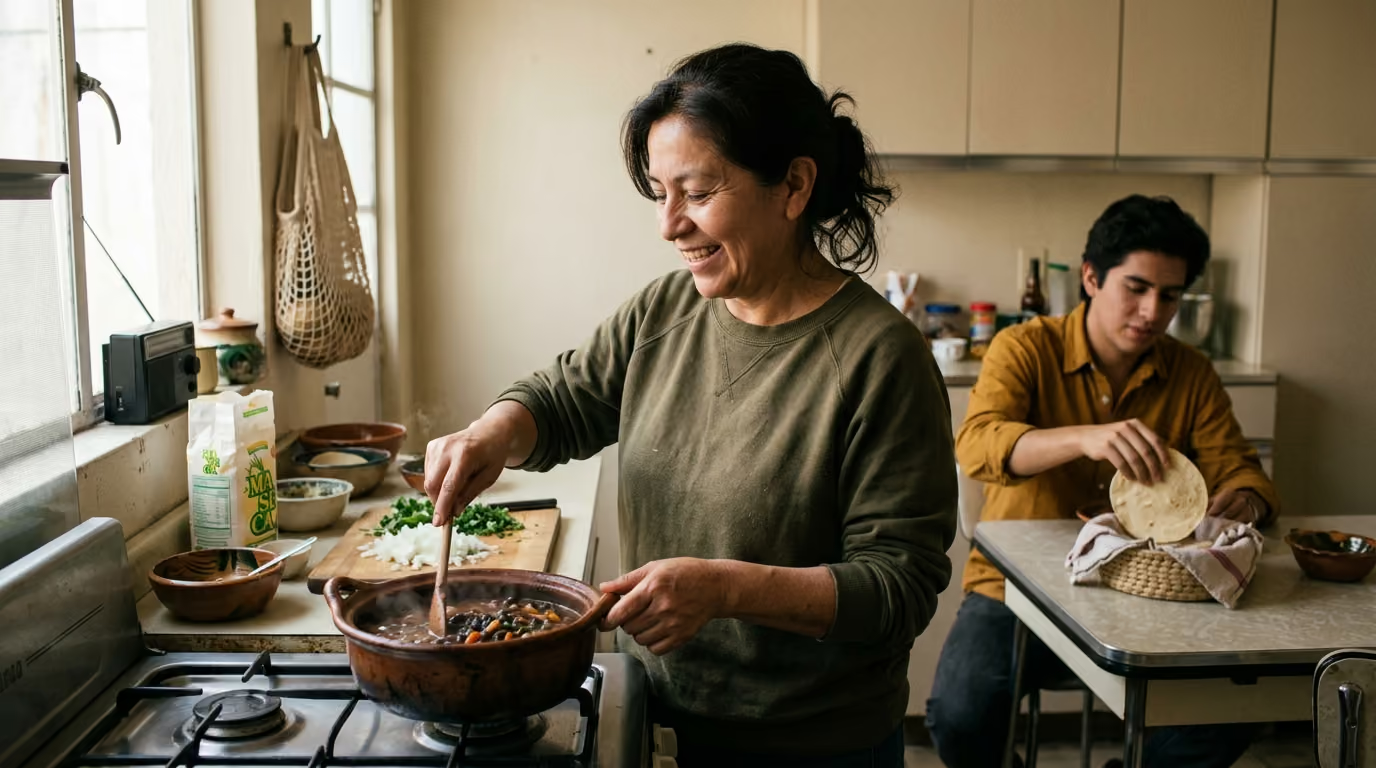

Global food traditions combine ancient grains, beans, and pulses to deliver diverse dietary fibers that nourish gut health and improve daily nutrition.





You open your kitchen cabinet or walk through the grocery store, looking at standard nutritional advice that tells you to buy specialized powders, packaged bran cereals, or unfamiliar health products. Many people assume that getting enough dietary fiber requires overhauling their entire routine or adopting a completely foreign style of cooking. Yet, when you look across global food histories, plant diversity has always been at the core of everyday cooking.
From lentil stews simmered in South Asia to bean and maize dishes across Central America, traditional eating patterns provide abundant fiber through ordinary ingredients. Understanding how different cultures prepare grains, legumes, vegetables, and seeds can change how you view your daily meals. You do not need to discard your cultural heritage or favorite family recipes to support your digestive health.
Instead of treating fiber as an isolated nutrient, you can look at it as a natural feature of time-tested culinary traditions. Every region has developed unique techniques to make fibrous plants delicious, digestible, and satisfying. This guide reviews the biology of plant fibers, examines traditional meal structures across multiple continents, and provides practical methods to adapt your everyday cooking.
Public health organizations worldwide agree that dietary fiber is an essential component of human health. The World Health Organization recommends that adults consume at least 25 grams of naturally occurring dietary fiber per day. In addition, the World Health Organization recommends eating at least 400 grams of fruits and vegetables daily to support overall wellbeing. For children, intake recommendations scale with age, beginning around 15 grams daily for young children and reaching adult targets by age ten.
National dietary guidelines provide similar targets, though the exact numbers vary by country. In Canada, health agencies recommend 25 grams per day for women and 38 grams per day for men. In Australia, the recommended daily intake ranges between 25 and 40 grams depending on age and gender. In Mexico, national dietary guidance points to a daily target of at least 25 grams.
Despite broad scientific agreement on the value of dietary fiber, actual consumption patterns lag significantly behind these targets. Epidemiological studies estimate that global average intakes often hover between 15 and 26 grams per day. One global dietary analysis calculated an average worldwide intake of approximately 22.5 grams daily, with substantial variation between regions. In many industrialized nations, average consumption drops well below 20 grams per day.
This gap between public health targets and actual intake is often linked to the rise of heavily refined grains and ultra-processed convenience foods. When whole grains lose their outer bran and germ layers, significant amounts of plant fiber and micronutrients are stripped away. Learning how traditional societies incorporate unrefined ingredients helps clarify how to close this gap without relying on expensive supplements. Readers interested in broader nutritional contexts can review our guides on food, fiber, and nutrition for deeper context.
Dietary fiber consists of complex plant carbohydrates that pass through the human stomach and small intestine without being broken down by human digestive enzymes. Because our bodies do not produce the specific enzymes required to cleave these complex chemical bonds, fiber travels intact into the large intestine. Once it arrives in the colon, fiber interacts with water, digestive fluids, and resident microorganisms in several distinct ways.
Scientists generally categorize plant fibers based on their physical properties, including solubility, viscosity, and fermentability. These categories help explain the physiological behavior of different plant foods, but they are not mutually exclusive. Most whole foods contain a complex blend of multiple fiber types rather than a single compound.
Soluble fibers dissolve or disperse in water to create viscous, gel-like substances within the digestive tract. Foods such as oats, barley, chia seeds, lentils, apples, and beans contain notable amounts of soluble fiber. As these fibers form gels, they slow the rate of gastric emptying from the stomach into the small intestine.
This delayed transit time can help moderate the absorption of glucose into the bloodstream, avoiding sharp post-meal blood sugar spikes. Furthermore, viscous soluble fibers can bind to bile acids in the intestine, which prompts the liver to pull circulating cholesterol from the blood to synthesize new bile. These physical actions support metabolic balance while keeping stools soft and manageable.
Insoluble fibers do not dissolve readily in water and remain largely intact throughout the digestive journey. Whole wheat products, wheat bran, brown rice, quinoa, nuts, seeds, and the tough skins of fruits and vegetables are rich sources of insoluble fiber. Rather than forming a gel, these fibers act like tiny sponges that absorb water and add physical bulk to the stool.
The added bulk stimulates mechanical stretch receptors along the intestinal wall, triggering rhythmic muscular contractions known as peristalsis. This process speeds up intestinal transit time and encourages regular bowel movements. To learn more about how physical bulk influences intestinal movement, see our resources on everyday gut function principles.
A significant portion of dietary fiber is fermentable, meaning it serves as an energy source for the trillions of bacteria living in the colon. Certain foods contain resistant starch, a form of carbohydrate that resists enzymatic breakdown in the upper digestive tract. Resistant starch is found in intact whole grains, green bananas, and cooked-and-cooled starchy foods like potatoes, rice, and legumes.
When gut bacteria ferment these fibers and starches, they produce metabolic byproducts called short-chain fatty acids, primarily acetate, propionate, and butyrate. Butyrate serves as the primary fuel source for the epithelial cells lining the colon, helping maintain a strong intestinal barrier. Propionate travels to the liver to assist with glucose regulation, while acetate circulates throughout the body to support wider cellular metabolism.
To understand how global foodways supply adequate plant material, it is useful to move beyond individual ingredient lists. A practical approach uses a three-part framework: food tradition, food function, and culinary adaptation. This structure allows you to appreciate how traditional dishes work without judging any single culture as inherently better or worse than another.
First, identify the food tradition by looking at the staple ingredients, common dishes, and regional cooking techniques. Second, examine the food function to determine where the dietary fiber originates, such as legumes, ancient grains, leafy greens, or root vegetables. Third, consider realistic adaptations that respect personal preferences, budget, ingredient availability, and digestive tolerance.
Traditional meal patterns rarely view food as a collection of isolated macronutrients. Instead, they rely on combinations of complementary foods that deliver flavor, texture, and sustained energy. The non-profit organization Oldways has documented how heritage diets across the Mediterranean, African diaspora, Latin America, and Asia share common foundations. These diets consistently feature vegetables, whole grains, pulses, fruits, nuts, and seeds, yet each region expresses these foundations through distinct culinary methods.
By recognizing the functional role of plant ingredients in heritage dishes, you can identify how your own family meals already provide digestive support. You do not need to replace your cultural meals with unfamiliar diet trends. Instead, you can look for ways to celebrate and gently expand the plant-rich elements already present on your plate.
Whole grains represent one of the most reliable sources of dietary fiber and micronutrients in traditional cuisines. A whole grain retains all three anatomical components: the fiber-rich outer bran, the nutrient-dense germ, and the starchy endosperm. In contrast, refined grains retain only the endosperm, which dramatically reduces their total fiber content.
Different geographic regions have historically cultivated specific grains suited to their local climates, soils, and agricultural traditions. These grains provide distinct culinary textures, ranging from chewy and nutty to soft and porridge-like.
Agricultural traditions across the African continent feature several drought-resistant, highly nutritious grains that have sustained communities for millennia. Sorghum is an ancient grain cultivated widely across Western and Eastern Africa, often ground into flours for flatbreads or simmered into hearty porridges. Sorghum contains substantial amounts of insoluble fiber, resistant starch, and protective polyphenols.
Pearl millet and finger millet are similarly vital staples, prized for their resilience and rich mineral content. Teff, a tiny grain native to the Horn of Africa, is the foundational ingredient in injera, a spongy, fermented sourdough flatbread central to Ethiopian and Eritrean dining. Because teff is so small, it is almost impossible to mill without retaining the bran and germ, making it an inherently whole-grain food rich in fiber, iron, and calcium.
The Mediterranean basin and the Fertile Crescent are the historical birthplaces of several ancient wheat varieties and cold-hardy grains. Emmer, farro, einkorn, and spelt are ancestral wheats that retain thick outer husks, preserving their bran layers during traditional stone-milling. These grains provide a dense, chewy texture and a nutty flavor when added to soups, pilafs, and cold salads.
Barley is another ancient grain deeply rooted in Mediterranean and North African cooking. It is exceptionally rich in beta-glucan, a viscous soluble fiber that supports healthy cholesterol levels and fosters beneficial gut bacteria. Bulgur, which consists of parboiled and cracked whole wheat berries, cooks quickly and forms the fiber-rich base of traditional dishes like tabbouleh, mujadara, and comforting tomato stews.
While polished white rice has become a prominent modern staple across Asia, Asian food traditions encompass a vast array of high-fiber grains. Buckwheat, which is botanically a seed but utilized as a grain, is ground into flour to make traditional soba noodles in Japan and hearty porridges across Northern China and Central Asia. Buckwheat supplies soluble fiber, resistant starch, and rutin, an antioxidant bioflavonoid.
Barley, known as mugi in Japan, bori in Korea, and damaizi in China, has long been mixed with white rice to stretch supplies and add texture. In Korean cuisine, japgokbap is a traditional multi-grain bowl that combines short-grain rice with black beans, sorghum, millet, and barley. Furthermore, traditional agricultural systems across East and Southeast Asia have long cultivated pigmented rices, such as black forbidden rice and red cargo rice, which retain their fibrous bran coats.
Legumes, which include beans, lentils, dry peas, and chickpeas, are arguably the most concentrated natural sources of dietary fiber in the human diet. A single cooked cup of lentils or black beans can provide between 12 and 16 grams of fiber, covering roughly half of an adult's daily requirement. Legumes deliver a potent combination of viscous soluble fiber, insoluble structural fiber, resistant starch, and plant-based protein.
Every inhabited continent has developed iconic culinary pairings that combine locally grown legumes with traditional grains. These pairings do not just ensure complete protein combinations; they also deliver balanced mixtures of fermentable and bulking fibers that support steady digestion.
Across Central and South America and the Caribbean, beans serve as an essential culinary foundation. Black beans, pinto beans, red kidney beans, and navy beans are traditionally simmered with aromatics like onions, garlic, cumin, and fresh epazote. In Mexican and Central American kitchens, beans are eaten whole in broths, mashed into frijoles refritos, or paired with whole-grain corn tortillas.
In Brazil, the national dish feijoada centers on a rich stew of black beans cooked slowly with savory seasonings and served alongside white rice, braised collard greens, and farofa. This combination provides a powerful balance of soluble fiber from the beans, insoluble fiber from the greens, and easily digestible energy from the rice.
South Asian cuisine features perhaps the world's most sophisticated and diverse pulse cookery. The term dal refers both to dried, split pulses and to the spiced, comforting stews made from them. Chana dal (split baby chickpeas), toor dal (split pigeon peas), moong dal (split mung beans), and masoor dal (red lentils) form the core of daily nutrition across India, Pakistan, Bangladesh, and Nepal.
These pulses are gently simmered until soft, then finished with a tadka or chhonk, a technique where whole spices like cumin, mustard seeds, turmeric, and ginger are bloomed in hot ghee or oil and poured over the lentils. This method improves flavor while incorporating carminative spices that aid in the comfortable digestion of complex legumes. South Asian cooking also utilizes ground pulse flours to create fiber-dense savory pancakes, such as South Indian dosa and cheela.
In the Levant, North Africa, and Southern Europe, legumes have sustained rural communities for centuries. Chickpeas are pureed with tahini, lemon, and garlic to create hummus, or ground with herbs and spices to form crispy, fried falafel. In Egypt, ful mudammas, a slow-cooked dish of fava beans seasoned with olive oil, garlic, and lemon juice, is a traditional breakfast that provides lasting fullness.
Further north in Italy, the classic rustic dish pasta e fagioli brings cannellini or borlotti beans together with pasta, tomatoes, and rosemary in a rich broth. In Spain, fabada Asturiana and lentil stews with sweet paprika highlight the enduring role of dried pulses in European home cooking. For more perspectives on plant diversity, review our educational materials on eating for digestive wellness.
Traditional food systems rarely rely solely on raw or plain cooked plants; they also make extensive use of fermentation. Fermentation is an ancient preservation method where beneficial bacteria and yeasts convert sugars and starches into organic acids, gases, or alcohols. While fermentation transforms the flavor, texture, and shelf life of foods, it is important to distinguish fermented foods from fiber-rich foods.
Fermented dairy products like yogurt and kefir, as well as fermented beverages, provide live microorganisms but contain virtually no dietary fiber. Conversely, whole beans and raw grains contain abundant fiber but no live active cultures unless fermented. However, traditional cuisines frequently bring these two categories together, combining fermented condiments with fiber-rich staples.
Recent clinical trials have begun investigating how diets high in fiber compare to diets rich in fermented foods. A notable randomized clinical trial conducted by researchers at Stanford Medicine examined 36 healthy adults over a 10-week intervention. One group consumed a diet high in fiber from plant sources, while the other group consumed a diet rich in fermented foods like yogurt, kefir, fermented cottage cheese, kimchi, and kombucha.
The researchers observed that participants in the fermented-food group demonstrated a consistent increase in overall gut microbial diversity over the study period. Furthermore, the fermented-food group showed decreased activation in four types of immune cells and reductions in 19 different inflammatory proteins measured in their blood. In contrast, the high-fiber group maintained stable average microbial diversity, and their inflammatory markers did not show the same widespread reductions.
Further analysis of the trial data revealed an important nuance. Participants in the high-fiber group who began the study with high baseline microbial diversity experienced reductions in inflammatory markers, while those with lower initial diversity did not show the same response. This finding suggests that a person's existing gut community influences how efficiently they process increased fiber loads.
It is crucial to interpret these findings carefully. This was a relatively small, short-term study conducted exclusively in healthy adults. The results do not suggest that fermented foods should replace fiber-rich plants, nor do they imply that dietary fiber is ineffective. Instead, they suggest that traditional culinary habits of combining fiber-rich grains and legumes with fermented condiments may offer synergistic biological support. To examine this connection further, see our updates on gut microbiome science.
Public conversations around digestive health are often filled with oversimplifications and rigid diet rules. These ideas can cause unnecessary stress and lead people to abandon nutritious cultural dishes in favor of restrictive eating plans. Examining these misconceptions through a scientific lens helps bring clarity to everyday food choices.
A frequent misconception in modern wellness circles is that traditional cultural diets, particularly those centered on rice, noodles, or tortillas, are inherently low in fiber. This assumption usually stems from looking exclusively at modern, highly processed versions of these dishes rather than their historical foundations.
In reality, traditional food cultures consistently incorporate a wide range of unrefined grains, legumes, wild greens, tubers, nuts, and seeds. When dishes like curries, stews, stir-fries, and soups are prepared using traditional proportions, vegetables and pulses often take center stage. Dismissing entire culinary traditions ignores centuries of plant-forward food wisdom.
Another widespread myth is that a single regional eating pattern, such as the standard Mediterranean diet, represents the only evidence-based model for digestive wellness. While Mediterranean dietary patterns are extensively studied and offer clear benefits, they are not the only way to eat well.
Traditional diets from West Africa, East Asia, the Andes, and Central America offer comparable nutritional profiles when built around whole plants. The core biological mechanisms that support health, such as soluble gel formation and microbial fermentation, respond to the physical properties of fibers rather than the geographic origin of a recipe. Health is supported through plant diversity and balanced preparation across all cultural backgrounds.
When people learn about the benefits of dietary fiber, they often attempt to double their daily intake overnight. This rapid change frequently leads to uncomfortable side effects, including excessive intestinal gas, painful abdominal cramping, loose stools, or severe bloating.
The clinical guidance from medical centers like the Mayo Clinic emphasizes that dietary fiber must be increased gradually over several weeks. When fiber intake rises too fast, colonic bacteria suddenly ferment large volumes of substrate, generating substantial amounts of carbon dioxide, hydrogen, and methane gas before the microbiome and intestinal motility can adapt.
Following recent interest in microbiome research, some individuals assume they can skip eating fibrous vegetables and grains if they take probiotic supplements or drink fermented beverages. As shown by clinical nutrition research, fermented foods and dietary fibers perform completely distinct biological functions.
Fermented foods introduce live bacteria and organic acids into the digestive system, but they do not provide the physical bulk, stool-softening properties, or slow-release fermentation substrates that dietary fibers supply. True digestive wellness relies on the physical presence of plant fibers to maintain intestinal motility and nourish resident microbes over the long term.
Improving your dietary fiber intake does not require you to learn an entirely new style of cooking or purchase expensive specialty ingredients. The most sustainable approach involves making small, gentle adjustments to the meals you already know and love. By focusing on simple substitutions and thoughtful additions, you can enhance the fiber content of your household cooking while keeping familiar flavors intact.
If you are currently consuming a low-fiber diet, aim to increase your intake by only 2 to 3 grams per day every few days. The National Institute of Diabetes and Digestive and Kidney Diseases advises this gradual pace, particularly for individuals with sensitive digestive tracts or irritable bowel syndrome. This slow progression gives your intestinal tract and resident gut microbes sufficient time to adjust without generating uncomfortable gas or bloating.
Along with increasing fiber, you must drink adequate fluids throughout the day. Dietary fiber requires water to swell, form soothing gels, and move smoothly through the digestive tract. Without sufficient hydration, increasing insoluble fiber can actually worsen constipation rather than relieve it. For additional strategies on maintaining comfort, explore our guides on managing bloating and regularity.
You can implement several grounded culinary adjustments without disrupting the flavor profile of your favorite dishes:
While adjusting your diet to include diverse plant foods is a safe and beneficial step for most people, gastrointestinal symptoms can sometimes signal an underlying medical issue. It is important to distinguish between normal, mild adjustment gas and signs that require professional evaluation.
Experiencing mild, temporary fullness after eating a large bowl of beans or lentils is a typical response to increased microbial fermentation. However, you should consult a qualified healthcare professional, such as a primary care doctor or a gastroenterologist, if you experience any of the following warning signs:
If you live with a diagnosed gastrointestinal condition such as irritable bowel syndrome, celiac disease, or inflammatory bowel disease, work alongside a registered dietitian who specializes in digestive health. A specialized dietitian can help you personalize your intake of fermentable carbohydrates while ensuring you receive balanced nutrition that respects your cultural background and personal preferences.
Revisit this guide whenever you feel overwhelmed by restrictive dietary trends, or when you are planning weekly meals and want to incorporate more plant variety. Returning to these core principles can help you identify practical, culturally familiar ways to nourish your digestion without unnecessary complexity.
Building a gut-friendly lifestyle is not about following rigid rules or chasing isolated food trends. By celebrating the grains, legumes, vegetables, and culinary techniques of global food traditions, you can create a sustainable, enjoyable approach to eating that supports your digestive health for years to come.
DigestGenius publishes research-led guidance on digestion, the gut microbiome, fiber, probiotics, gut-brain signaling, inflammation and everyday digestive wellbeing.


Explore clear, research-led guidance on digestion, the microbiome, food, fiber, probiotics and the gut-brain connection.
read the blog